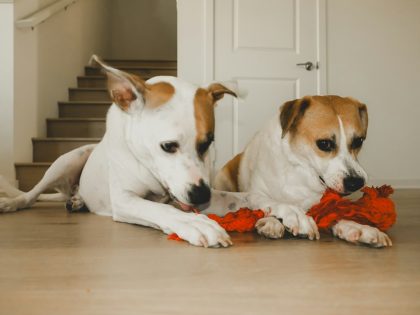
Dogs have not been diagnosed with human Down syndrome. Down syndrome in people is caused by an extra full or partial copy of human chromosome 21. Dogs have a different chromosome arrangement—78 chromosomes in 39 pairs—so a dog with unusual facial features, slow growth, learning difficulties, or poor coordination should not be labeled with “Down syndrome” based on appearance alone. Those signs can point to a congenital, hormonal, liver, or neurologic condition that needs a veterinary diagnosis.
If your puppy or adult dog has developmental differences, a veterinarian can identify the actual cause and determine whether treatment, monitoring, or supportive care is needed. Some look-alike conditions are manageable, and delaying an exam may allow a treatable problem to worsen.
Why “Down syndrome in dogs” is a misleading label
Humans normally have 46 chromosomes in 23 pairs. Down syndrome occurs when there is extra genetic material from chromosome 21. Dogs normally have 78 chromosomes in 39 pairs, and their chromosomes do not correspond one-for-one with ours. Veterinary literature has not described a canine equivalent of human trisomy 21.
Dogs can have other chromosome abnormalities and inherited disorders, but that does not make them “Down syndrome.” In some cases, severe chromosome changes may prevent an embryo from developing or a puppy from surviving long enough to be tested. In others, the dog’s signs come from a completely different condition. The practical takeaway is simple: the label does not provide a diagnosis or a care plan.
Signs that deserve a veterinary evaluation
A dog may be described online as having a “Down syndrome look” when the real issue is delayed development, an unusual head shape, short limbs, muscle weakness, or abnormal behavior. These observations are useful to tell your veterinarian, but they are not diagnostic.
| What you notice | Possible categories a vet may consider | How quickly to act |
|---|---|---|
| Slow growth, short limbs, poor muscle tone, persistent puppy coat | Congenital hypothyroidism, pituitary dwarfism, other developmental disorders | Schedule an exam promptly, especially for a young puppy |
| Dome-shaped skull, abnormal eye position, circling, difficulty learning | Congenital hydrocephalus or another neurologic disorder | Prompt exam; emergency care if signs are sudden or severe |
| Poor growth with disorientation, staring, head pressing, vomiting, or seizures | Portosystemic liver shunt or another metabolic problem | Urgent evaluation; seizures or head pressing are emergencies |
| Lethargy, cold intolerance, skin or coat changes, constipation | Thyroid disease or another systemic illness | Book a veterinary visit; do not diagnose from symptoms alone |
| New weakness, wobbliness, pain, or inability to walk | Neurologic, spinal, orthopedic, toxic, or metabolic causes | Same-day or emergency care depending on severity |
Record when the signs began, whether they are getting worse, and what triggers them. Short videos of walking, unusual eye movements, tremors, or episodes of confusion can help your veterinarian see signs that may not occur in the clinic.
Conditions sometimes mistaken for Down syndrome
Congenital or juvenile hypothyroidism
Thyroid hormone is important for normal growth and nervous-system development. Rare congenital hypothyroidism can cause slow growth, short limbs, a relatively large head or tongue, poor muscle tone, lethargy, constipation, and delayed development. The signs can be subtle at first and may become more obvious as littermates grow normally.
A single low thyroid value does not always prove hypothyroidism. Illnesses and some medications can suppress thyroid hormone measurements. Veterinarians interpret clinical signs together with appropriate thyroid testing, which may include total T4, free T4, and thyroid-stimulating hormone.
Pituitary dwarfism and growth hormone deficiency
Pituitary dwarfism can cause proportionate small stature, delayed replacement of the puppy coat, hair loss, and skin darkening. It is not the same as skeletal dwarfism, and not every unusually small dog has a hormone disorder. Diagnosis may involve blood tests and referral to a veterinary internal-medicine specialist or endocrinologist.
Congenital hydrocephalus
Hydrocephalus is an abnormal buildup of cerebrospinal fluid inside the skull. Affected puppies may have a dome-shaped head, an open soft spot, downward- or outward-positioned eyes, circling, abnormal walking, vision problems, seizures, or difficulty learning. A veterinarian may use neurologic examination and imaging such as ultrasound, CT, or MRI to confirm the condition. Prognosis varies with severity and response to treatment.
Portosystemic liver shunt
A congenital portosystemic shunt allows blood from the intestines to bypass the liver. Toxins that the liver would normally process can then affect the brain and other organs. Possible signs include poor growth, low muscle development, vomiting or diarrhea, urinary problems, staring, disorientation, head pressing, and seizures. Bloodwork, urinalysis, bile-acid testing, and diagnostic imaging may be used to investigate a shunt.
Other congenital or neurologic disorders
Birth defects, genetic syndromes, vision or hearing impairment, spinal disease, and other neurologic problems can affect appearance, movement, behavior, or learning. For example, a suddenly wobbly or weak dog needs a broader workup than a puppy that has always developed differently. Our guides to shaking in dogs and IVDD warning signs explain other symptoms that should not be dismissed as personality or clumsiness.
How veterinarians find the real cause
There is no standard veterinary test that diagnoses “Down syndrome” in a dog. The workup should instead be guided by the dog’s actual signs, age, medical history, and physical examination.
A veterinarian may recommend:
- A detailed history: birth and growth history, littermate comparison, diet, medications, toxin exposure, and when each sign appeared.
- A complete physical and neurologic exam: body proportions, skull shape, eyes, muscle tone, reflexes, gait, vision, hearing, heart, and abdomen.
- Baseline laboratory tests: complete blood count, chemistry profile, blood glucose, electrolytes, and urinalysis.
- Targeted tests: a full thyroid panel, bile-acid testing, or other hormone and metabolic tests based on the findings.
- Imaging: ultrasound for suspected liver abnormalities, or CT/MRI for structural brain disease.
- Specialist or genetic consultation: when a rare inherited or congenital disorder is suspected.
Direct-to-consumer breed DNA tests are not a substitute for this workup. They may provide ancestry or selected mutation information, but they cannot explain every developmental abnormality or rule out the conditions above.
When your dog needs urgent care
Contact an emergency veterinary clinic now if your dog has a seizure lasting about five minutes or repeated seizures, collapses, cannot stand, presses the head against walls or furniture, becomes markedly disoriented, has trouble breathing, or develops sudden vision loss. Repeated vomiting, profound weakness, or a rapidly worsening puppy also warrants urgent care.
Breathing changes can be difficult to judge at home. If you are unsure, review how to recognize abnormal breathing during sleep while arranging professional advice. You can also learn how to take a dog’s temperature safely, but a normal temperature does not rule out a neurologic, liver, or hormonal emergency.
Caring for a dog with a developmental or congenital condition
The right care depends on the diagnosis. Avoid generic online plans that prescribe special food, supplements, or exercise simply because a dog looks different. Some disorders need medication or surgery; others are managed through environmental changes and regular monitoring.
- Follow the condition-specific plan. Give prescribed medication exactly as directed and keep recheck appointments and laboratory monitoring.
- Make movement safer. Nonslip rugs, gates near stairs, and an appropriate ramp can reduce falls, but ask your veterinarian or rehabilitation professional what is safe for your dog.
- Use patient, reward-based training. Short, consistent sessions and predictable routines can help dogs with vision, hearing, mobility, or learning differences.
- Feed a complete diet chosen for the diagnosis. Do not switch to soft food, restrict protein, or add supplements unless your veterinarian recommends it for a specific reason.
- Track changes. Note appetite, weight, energy, bowel and urinary habits, walking, sleep, and episodes of unusual behavior.
- Discuss reproduction responsibly. A dog with a suspected inherited or congenital disorder should not be bred without veterinary and genetic guidance.
Quality of life cannot be predicted from appearance alone. Many dogs with stable disabilities can enjoy comfortable lives with suitable treatment and support, while others have progressive disease that needs frequent reassessment. Your veterinarian can help you evaluate comfort, mobility, appetite, engagement, and bad days over time.
Do not diagnose a dog by appearance
A broad head, wide-set eyes, short stature, or a protruding tongue may be normal for an individual dog or breed. The same feature can also accompany a medical problem. Photos and social-media labels cannot distinguish between the two.
If someone advertises a puppy as having “Down syndrome,” ask for complete veterinary records and an independent pre-purchase examination. The phrase may be well-intentioned, but it is not a recognized canine diagnosis and should never replace documented findings.
Frequently asked questions
Can dogs be born with an extra chromosome?
Dogs can have chromosome abnormalities, but human Down syndrome specifically involves human chromosome 21. Veterinary medicine has not established an equivalent trisomy 21 diagnosis in dogs. A dog with developmental differences needs testing for canine conditions, not assumptions based on a human diagnosis.
Is there a Down syndrome test for dogs?
No routine veterinary test diagnoses Down syndrome in dogs. A veterinarian may order thyroid tests, liver-function testing, imaging, or specialized genetic evaluation to investigate the signs actually present.
Why does my puppy have a large head or short limbs?
These traits can be related to breed, normal variation, skeletal development, hormone disorders, hydrocephalus, or another congenital condition. A prompt exam is especially important if the puppy also has slow growth, weakness, abnormal walking, unusual eye position, seizures, or trouble learning.
Can a dog with developmental differences live a normal life?
It depends on the cause and severity. Some conditions can be treated or managed for years; others may be progressive or life-limiting. An accurate diagnosis is the best basis for prognosis and a realistic care plan.
Should I adopt a dog described as having Down syndrome?
Do not rely on the label. Ask for the dog’s records, diagnosis, current medications, anticipated care needs, and an independent veterinary assessment. Adoption can still be a good choice when you understand the dog’s medical and financial needs.
Sources
- PetMD: Can Dogs Have Down Syndrome?
- American Kennel Club: Canine chromosomes and inherited conditions
- Merck Veterinary Manual: Hypothyroidism in animals
- VCA Animal Hospitals: Portosystemic shunt in dogs
- VCA Animal Hospitals: Hydrocephalus in toy-breed puppies
This article is for general education and is not a diagnosis or a substitute for care from a licensed veterinarian. Seek urgent veterinary help for seizures, collapse, breathing difficulty, head pressing, inability to stand, or rapidly worsening signs.