Picking the best aquarium fish for beginners isn’t about grabbing the flashiest fish in the store. It’s about choosing species tough enough to handle a new tank, a learning curve, and a few honest mistakes along the way. Get this part right, and the rest of the hobby gets a whole lot easier.
This guide walks through exactly which fish fit that description, why they work so well for new fishkeepers, and how to set your tank up so those fish actually thrive instead of just survive. Let’s get into it.
Why So Many Beginners Lose Fish in the First Month
If you’ve lost a fish or two before finishing this article, you’re in good company. Fishkeeping looks simple from the outside, but there’s a hidden learning curve most beginners don’t discover until it’s too late. Between confusing pet store advice, fish that outgrow their tanks, and the invisible chemistry happening in the water, it’s easy to see why so many new tanks run into trouble in the first few weeks.
The good news is that almost every one of these problems is preventable. It usually comes down to two things: choosing fish tough enough to handle a beginner’s learning curve, and giving your tank the time it needs to become a stable, livable environment. This guide covers both, starting with what actually makes a fish “beginner-friendly” in the first place.
What “Beginner-Friendly” Actually Means
Not every fish labeled “easy” at the pet store deserves that label. Before jumping into the list, it helps to understand what actually makes a fish beginner-friendly in the first place.
Hardiness Matters More Than Looks
A truly beginner-friendly fish can tolerate small swings in water temperature, pH, and water quality without immediately getting sick. New tanks are unstable by nature, so a fish that can roll with a few bumps in the road gives you room to learn.
A Forgiving Diet
Some fish need live food, specialized diets, or very specific feeding schedules. Beginner-friendly fish, on the other hand, usually do well on quality flake or pellet food, which makes daily care far simpler.
Low Aggression
Fish that get territorial or aggressive can be stressful to manage, especially when you’re still learning to read fish behavior. Peaceful species make it easier to build a community tank without constant conflict.
Manageable Adult Size
A fish that looks small and cute at the store can turn into a serious space problem within a year. Beginner-friendly species tend to stay a reasonable size, which means your original tank setup can keep up with their growth without requiring constant upgrades.
Availability and Cost
Practical considerations matter too. Beginner-friendly fish also tend to be widely available and affordable, which makes it easier to start small, learn as you go, and avoid a major financial commitment before you know whether the hobby is right for you.
Why Pet Store Labels Can Be Misleading
Stores sometimes market fish as “easy” simply because they’re inexpensive or widely available, not because they’re actually well-suited for beginners. Goldfish are a classic example. They’re cheap, common, and often sold in tiny bowls, yet they actually produce a huge amount of waste and need far more space than most people realize. Understanding the real criteria behind “beginner-friendly” helps you avoid this kind of well-intentioned but misleading advice.
Even Hardy Fish Need a Properly Cycled Tank
Here’s the part that trips up almost every new fishkeeper: no fish, no matter how hardy, does well in an uncycled tank. Hardiness gives you a buffer for small mistakes, not a free pass to skip the basics.
Before You Buy: What Your Tank Needs First
Before you even think about which fish to bring home, your tank needs to be ready to support life. Skipping this step is the single biggest reason beginner fish don’t make it past their first month.
A Quick Primer on the Nitrogen Cycle
Every aquarium needs a colony of beneficial bacteria to process fish waste. Fish produce ammonia, which is toxic in even small amounts. Beneficial bacteria convert that ammonia into nitrite, which is also toxic, and then into nitrate, which is far less harmful and removed through regular water changes. This process is called the nitrogen cycle, and it typically takes several weeks to establish in a brand-new tank.
Adding a full stock of fish to an uncycled tank floods the water with waste before the bacteria colony is large enough to handle it. This is often called “new tank syndrome,” and it’s responsible for the majority of beginner fish deaths in the first few weeks.
How Long Does Cycling Actually Take?
Most tanks take anywhere from four to eight weeks to fully cycle, depending on the method used and how consistently the tank is monitored. Some hobbyists speed this process up by using bottled bacteria supplements or by adding a small piece of established filter media from a healthy, cycled tank. Others choose to “fishless cycle” by adding a small amount of pure ammonia to feed the bacteria colony before any fish are introduced, which avoids putting live animals through the stressful early stages altogether.
Whichever method you choose, the goal is the same: build up enough beneficial bacteria that ammonia and nitrite are processed into nitrate almost as quickly as your fish produce waste. Rushing this step is one of the most common and most avoidable mistakes in the entire hobby.
Minimum Tank Size Considerations
Bigger tanks are almost always easier for beginners, not harder. A larger volume of water dilutes waste and buffers against sudden swings in temperature and chemistry, which gives you more room for error while you’re learning. Most experienced fishkeepers recommend starting with at least a 10 to 20-gallon tank rather than a small nano tank or bowl, even though smaller setups look more manageable on paper.
Water Parameters Beginners Should Know
You don’t need to become a chemist, but a few basics go a long way:
- Temperature: Most tropical community fish thrive between 74 and 80°F.
- pH: Many popular beginner fish tolerate a pH range of roughly 6.5 to 7.5.
- Ammonia and nitrite: These should read at 0 ppm in a fully cycled, healthy tank.
- Nitrate: Some nitrate is normal and expected, but it should stay within a safe, moderate range through regular water changes.
A simple liquid test kit makes checking these numbers easy and is one of the best investments a new fishkeeper can make.
Why Cycling Mistakes Are the #1 Cause of Early Fish Loss
If there’s one lesson worth repeating throughout this entire guide, it’s this: patience during setup pays off. Fish that die in the first month are rarely victims of bad luck. In most cases, they were introduced to a tank that simply wasn’t biologically ready to support them yet.
Essential Equipment Every Beginner Tank Needs
Before bringing home any fish from the list below, make sure your tank is equipped with the basics. Skipping any of these pieces of equipment can undermine even the best fish choices.
- A reliable filter. Filtration is the engine behind the nitrogen cycle. Choose a filter rated for a tank size slightly larger than yours to give extra filtration capacity.
- A heater (for tropical species). Most beginner-friendly fish need stable, warm water, so an adjustable aquarium heater with a built-in thermostat is a worthwhile investment.
- A thermometer. A simple stick-on or floating thermometer lets you confirm your heater is doing its job.
- A liquid water test kit. This lets you track ammonia, nitrite, nitrate, and pH so you can catch problems before they affect your fish.
- Substrate and décor. Gravel or sand, along with plants, rocks, or driftwood, give fish places to explore and hide, which reduces stress significantly.
- A gravel vacuum. This tool makes routine water changes far easier by removing debris from the substrate at the same time.
Investing in quality equipment upfront often costs less in the long run than replacing cheap gear or losing fish to preventable problems.
The 15 Best Aquarium Fish for Beginners
Now for the main event. Each of these fish earned a spot on this list because they combine hardiness, a manageable temperament, and genuine beginner-friendly care requirements.
1. Betta Fish
Bettas are famous for their flowing fins and bold personalities. They’re hardy, don’t require a large group to feel secure, and can live happily in tanks as small as 5 gallons, although 10 gallons or more gives them noticeably more room to thrive. Keep only one male per tank, since male bettas are territorial and will fight other males.
Bettas eat a specialized betta pellet or flake food and generally do well on a simple feeding routine of small portions once or twice a day. They’re also known for their curious, almost dog-like personalities, often recognizing their owners and investigating new objects added to the tank.
Common mistake: Housing a betta in an unheated bowl. Bettas are tropical fish and need a stable, warm temperature to stay healthy.
2. Guppies
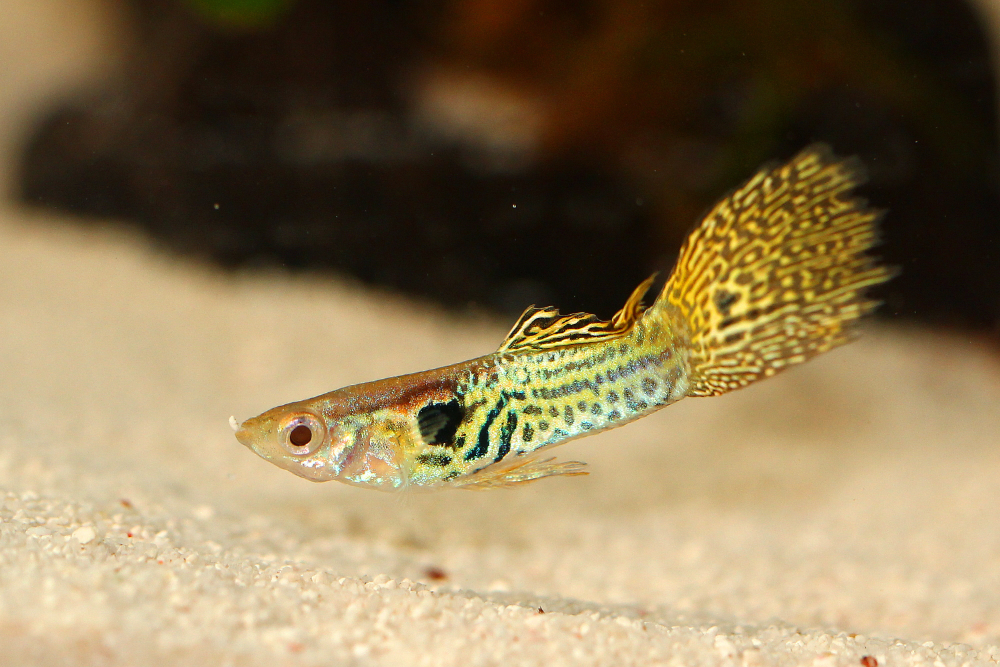
Guppies are colorful, active, and incredibly easy to care for. They adapt well to a range of water conditions and breed readily, which makes them a fun, low-pressure choice for beginners who want to see their tank grow. A 10-gallon tank comfortably supports a small starting group, and guppies do well eating standard flake food supplemented with the occasional treat.
Common mistake: Mixing too many males with too few females, which can lead to constant chasing and stressed-out fish.
3. Neon Tetras
These small, shimmering fish are peaceful schoolers that look stunning in groups of six or more. They’re a classic community tank staple and do best when kept in a properly established, cycled aquarium. A planted tank with soft lighting helps their iridescent blue and red stripes really stand out.
Common mistake: Adding neon tetras too early, before the tank has finished cycling. They’re sensitive to ammonia spikes in immature tanks.
4. Zebra Danios
Zebra danios are about as tough as freshwater fish get. They tolerate a wide range of temperatures and water conditions, making them a popular choice for helping to cycle a new tank safely.
Common mistake: Keeping them in a tank that’s too small or lacks open swimming space, since danios are fast, active swimmers.
5. Platies
Platies are hardy, peaceful, and come in a huge range of colors. They’re livebearers, meaning they give birth to free-swimming babies instead of laying eggs, which many beginners find fascinating to watch.
Common mistake: Overcrowding the tank as platies reproduce, since populations can grow quickly without some planning.
6. Mollies
Mollies are easygoing, adaptable fish that do well in a wide pH range and even tolerate a small amount of aquarium salt, which some hobbyists use to support their health. They’re social and do best in small groups. Like platies, mollies are livebearers and appreciate a diet that includes some vegetable matter alongside standard flake food.
Common mistake: Keeping mollies alone. They tend to be happier and less stressed in the company of their own kind.
7. Corydoras Catfish
These friendly bottom-dwellers are a favorite for a reason. They help keep the substrate tidy, get along with almost every peaceful community fish, and do best in small schools of at least four to six. Sinking wafers or pellets ensure they get enough food, since they don’t compete well with faster mid-water swimmers for flakes.
Common mistake: Choosing a tank with a rough or overly coarse substrate, which can irritate their sensitive barbels.
8. White Cloud Mountain Minnows
Often overlooked, these small, hardy fish tolerate cooler water better than most tropical species, which makes them a flexible option for unheated tanks. They’re peaceful, active, and easy to feed.
Common mistake: Assuming they need a heater. In many home environments, they do just fine without one.
9. Cherry Barbs
Cherry barbs are calmer than many of their barb relatives, making them a good option for community tanks. Males display a vibrant red color, especially when kept in a comfortable, low-stress environment.
Common mistake: Keeping them in groups that are too small, which can lead to shy, stressed fish that hide constantly.
10. Harlequin Rasboras
These peaceful schooling fish are known for their distinctive black, wedge-shaped marking. They do best in groups and add graceful movement to a community tank without any aggression concerns.
Common mistake: Keeping too few. Rasboras feel most secure and display their best behavior in schools of six or more.
11. Kuhli Loach
With their eel-like bodies, kuhli loaches are unique, nocturnal bottom-dwellers that are surprisingly hardy once settled in. They appreciate hiding spots and a soft substrate to burrow into.
Common mistake: Not providing enough hiding spaces, which can leave these shy fish feeling exposed and stressed.
12. Otocinclus Catfish
These tiny algae-eaters are a favorite for keeping tanks clean naturally. They’re peaceful and do well in established, planted tanks where algae growth gives them something to graze on.
Common mistake: Adding them to a brand-new tank that doesn’t have enough natural algae yet to support their diet.
13. Endler’s Livebearers
Closely related to guppies, Endler’s livebearers are small, hardy, and brightly colored. They’re active swimmers that do well in community tanks and tolerate a range of water conditions.
Common mistake: Underestimating how quickly they can reproduce in a mixed-sex tank.
14. Swordtails
Named for the sword-like extension on males’ tails, swordtails are hardy, active, and adaptable. They do well in community tanks and tolerate a decent range of water parameters.
Common mistake: Keeping multiple males together without enough space, which can lead to chasing and fin-nipping.
15. Dwarf Gourami
Dwarf gouramis add a splash of color and a bit of personality to a community tank. They’re generally peaceful, though males can be territorial with each other, so one male per tank is usually the safer choice for beginners.
Common mistake: Housing two males together, which often leads to ongoing aggression.
Fish to Approach With Caution (or Avoid) as a Beginner
Not every popular fish is actually a good fit for a first tank. These aren’t “bad” fish, just species that are frequently mismatched with beginner setups.
- Goldfish (in small tanks): Goldfish are hardy in terms of temperature tolerance, but they produce a heavy bioload and grow much larger than most people expect, often requiring 20 gallons or more per fish.
- Common plecos: Frequently sold as small juveniles, common plecos can grow well over a foot long, quickly outgrowing typical beginner tanks.
- Certain cichlids: Many cichlid species are territorial and require very specific water conditions, making them a better fit for hobbyists with more experience.
- Chinese algae eaters: Often mislabeled as peaceful algae cleaners, they can become aggressive as they mature.
These fish simply demand more space, more specialized care, or more experience reading fish behavior than most first-time owners are prepared for right out of the gate.
Building Your First Community Tank
Once you’ve picked a few species from the list above, the next step is making sure they’ll actually get along.
Compatibility Basics
A well-balanced community tank usually includes fish that occupy different levels of the water column:
- Top dwellers: Fish like guppies and hatchetfish spend most of their time near the surface.
- Mid-level swimmers: Tetras, rasboras, and barbs fill the middle of the tank.
- Bottom dwellers: Corydoras and kuhli loaches patrol the substrate.
Mixing fish across these levels helps you use your tank’s full space and reduces overcrowding at any single level.
Watching for Compatibility Issues Early
Even peaceful species can occasionally clash, especially in the first few days after fish are introduced to a new tank or to each other. Keep an eye out for chasing that doesn’t settle down after the first day or two, fin damage, or fish that consistently hide and avoid feeding. Most minor squabbles resolve as fish establish a routine, but persistent aggression is a sign that a particular combination may not be the right fit, and rehoming or rearranging tankmates may be necessary.
Sample Beginner-Friendly Stocking Combinations
- 10-gallon tank: A small school of neon tetras with a group of Corydoras catfish
- 20-gallon tank: Zebra danios, harlequin rasboras, and a school of Corydoras
- 30-gallon tank: Platies, cherry barbs, otocinclus catfish, and a small group of kuhli loaches
These are starting points, not strict rules. Always research the adult size and specific needs of each species before finalizing your stocking plan.
Common First-Month Mistakes (and How to Avoid Them)
Even with great fish choices, a few common habits can undo all your good planning.
- Overfeeding. Uneaten food breaks down and spikes ammonia levels. A general rule is to feed only what fish can finish within two to three minutes.
- Adding too many fish too soon. Stock your tank gradually, giving the bacteria colony time to catch up with the added waste.
- Skipping water testing. A simple test kit takes the guesswork out of tank health and catches problems before they become emergencies.
- Ignoring adult size. A fish that looks small at the store may grow far too large for your tank within a year.
- Not acclimating fish properly. Sudden changes in temperature or water chemistry can shock new fish. Floating the bag and slowly mixing tank water in over 15 to 20 minutes helps ease the transition.
Signs Your Fish Are Thriving vs. Struggling
Learning to read your fish’s behavior is one of the most valuable beginner skills you can build.
Signs of a healthy, thriving fish:
- Active swimming and normal appetite
- Bright, vivid coloration
- Smooth, undamaged fins
- Curious, alert behavior
Warning signs of stress or illness:
- Clamped fins held close to the body
- Loss of appetite
- Gasping at the water’s surface
- Unusual spots, discoloration, or visible lethargy
If you notice warning signs, test your water first. Poor water quality is the most common underlying cause of stress in beginner tanks, and it’s often the easiest problem to fix once identified.
Final Buying Tips for Beginners
Where and how you buy your fish matters just as much as which species you choose.
- Choose a reputable source. Local fish stores with clean, well-maintained tanks are often a better choice than crowded, poorly kept displays.
- Inspect before you buy. Look for active fish with clear eyes, intact fins, and no visible spots or sores.
- Ask about the tank’s history. A knowledgeable staff member can tell you how long fish have been in the store and whether any tankmates have shown signs of illness.
- Start small and scale up. It’s tempting to stock your entire tank on day one, but adding fish gradually gives your tank’s ecosystem time to adjust and gives you time to learn each species’ needs.
Frequently Asked Questions
What is the easiest beginner fish to keep alive?
Zebra danios and guppies are often considered among the easiest beginner fish, thanks to their tolerance for a wide range of water conditions and their forgiving nature during the early stages of fishkeeping.
How many fish can I put in a 10-gallon tank as a beginner?
A common starting guideline is roughly one inch of adult fish per gallon of water, though this varies by species and their specific needs. For a 10-gallon tank, that typically means a small school of 5 to 8 small fish, such as neon tetras or Corydoras catfish.
Do beginner fish need a heater?
Most popular beginner community fish are tropical species that need stable, warm water, so a heater is usually necessary. A few hardy species, like White Cloud Mountain minnows, can tolerate cooler, unheated water.
How long should I wait before adding fish to a new tank?
Most tanks take several weeks to fully cycle. Adding fish before this process finishes is one of the leading causes of early fish loss, so patience during setup really does pay off.
Can I keep just one fish, or do I need a group?
It depends on the species. Bettas do fine alone, but schooling fish like neon tetras, harlequin rasboras, and Corydoras catfish need to be kept in groups to feel secure and display natural behavior.
Are goldfish good beginner fish?
Goldfish are hardy, but they aren’t as beginner-friendly as their reputation suggests. They produce a heavy bioload and grow much larger than most starter tanks can comfortably support.
Final Thoughts
Finding the best aquarium fish for beginners really comes down to matching hardy, forgiving species with a properly prepared tank. Skip the flashy but fragile fish, give your tank time to cycle, and start with species built to handle a learning curve. Do that, and you’ll set yourself and your fish up for a hobby that lasts a lot longer than the first month.